Matcha culture · 6 min read
The ceremony in a paper cup.
How a slow, centuries-old ritual became Chatswood's favourite fast drink, and what we kept from the old way at Pour.
WRITER: READ. · onehelpst. · 31 OCT 2026
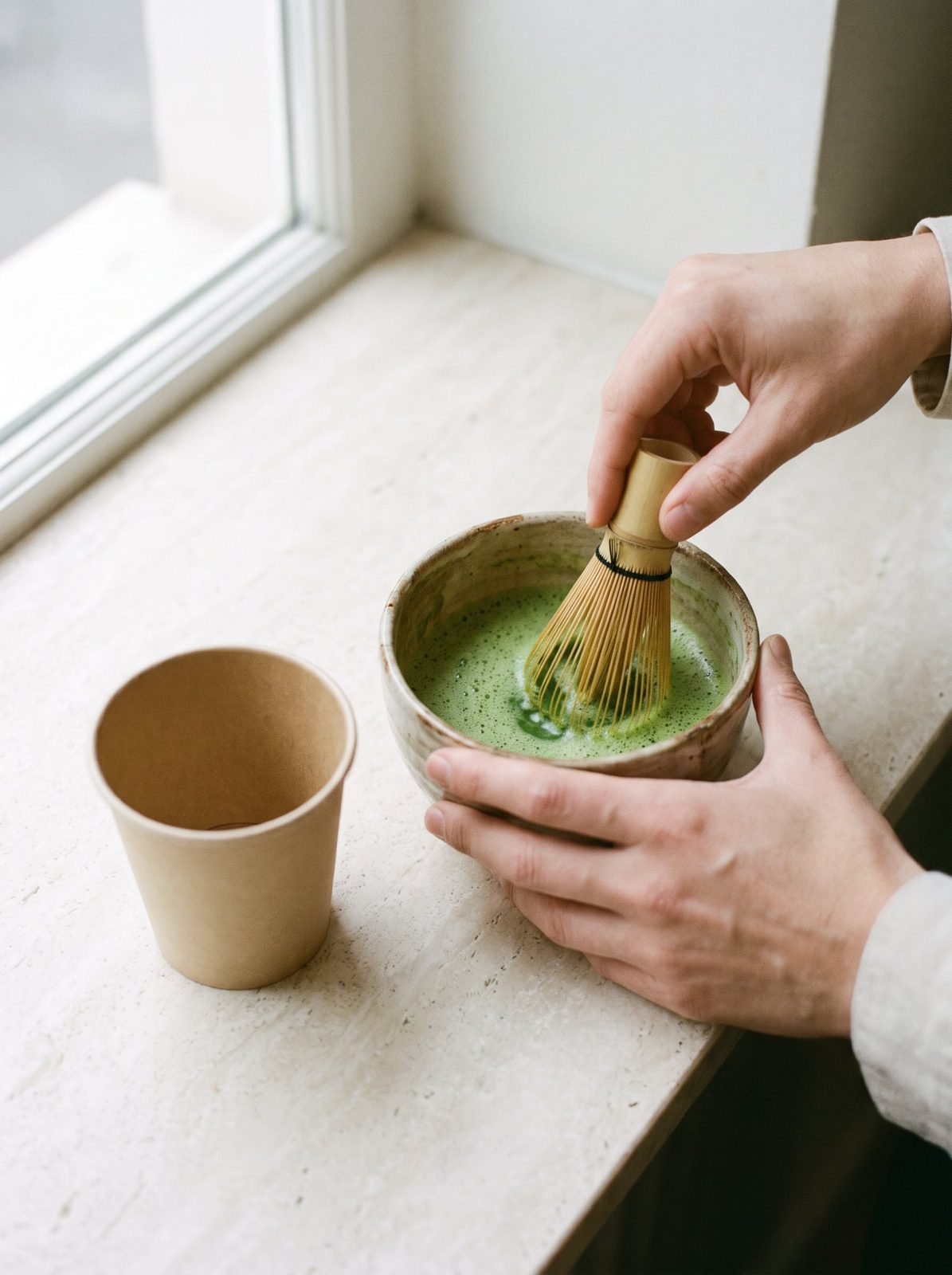
Order a matcha latte almost anywhere in Chatswood and it arrives in a minute or two, in a paper cup, ready for the walk back to work. The powder inside it comes from a much slower tradition: one that started in Chinese monasteries, crossed the sea to Japan with a Zen monk, and was shaped over centuries into one of the most deliberate rituals in the world.
A Song dynasty habit
Whisking powdered tea into hot water was a practice of Song dynasty China (960–1279). Writers of the time left careful instructions. Cai Xiang's Record of Tea, written between 1049 and 1053, and the Treatise on Tea credited to Emperor Huizong in 1107 both describe it.
Tea itself had reached Japan centuries earlier. The oldest written record, in the Nihon Kōki, has the monk Eichū serving tea to Emperor Saga in 815, but it was so rare then that only monks and nobles drank it.
The Japanese monk Eisai saw powdered tea being prepared in Zen monasteries on his travels in China, and is credited with bringing the practice home around 1191. His book Kissa Yōjōki, usually translated as Drinking Tea for Health, was presented to the shogun Minamoto no Sanetomo in 1214 and is regarded as Japan's first book about tea. Tea growing spread out from the Kyoto area, and Uji, just south of Kyoto, became Japan's benchmark for fine tea.
By the Edo period the tea ceremony had become part of samurai life and shogunate ritual, while everyday tea drinking spread among ordinary people.
From temple to tearoom
Over the fifteenth and sixteenth centuries, tea masters turned a bowl of whisked tea into an art. Murata Jukō developed wabi-cha, a style that valued plainness over display. Takeno Jōō and Sen no Rikyū refined it into the tea ceremony that is still practised today. The point was attention: to the bowl, to the water, to the guest, and to the few minutes the tea takes to make.
Two ways of making it came out of that tradition. Koicha, thick tea, uses about 4 grams of matcha in 30 millilitres of water at around 80°C, and is kneaded rather than foamed. Usucha, thin tea, uses half the powder in twice the water, a little hotter, and is whisked to a fine froth. Usucha is the one most people would recognise.
Why the powder takes so long
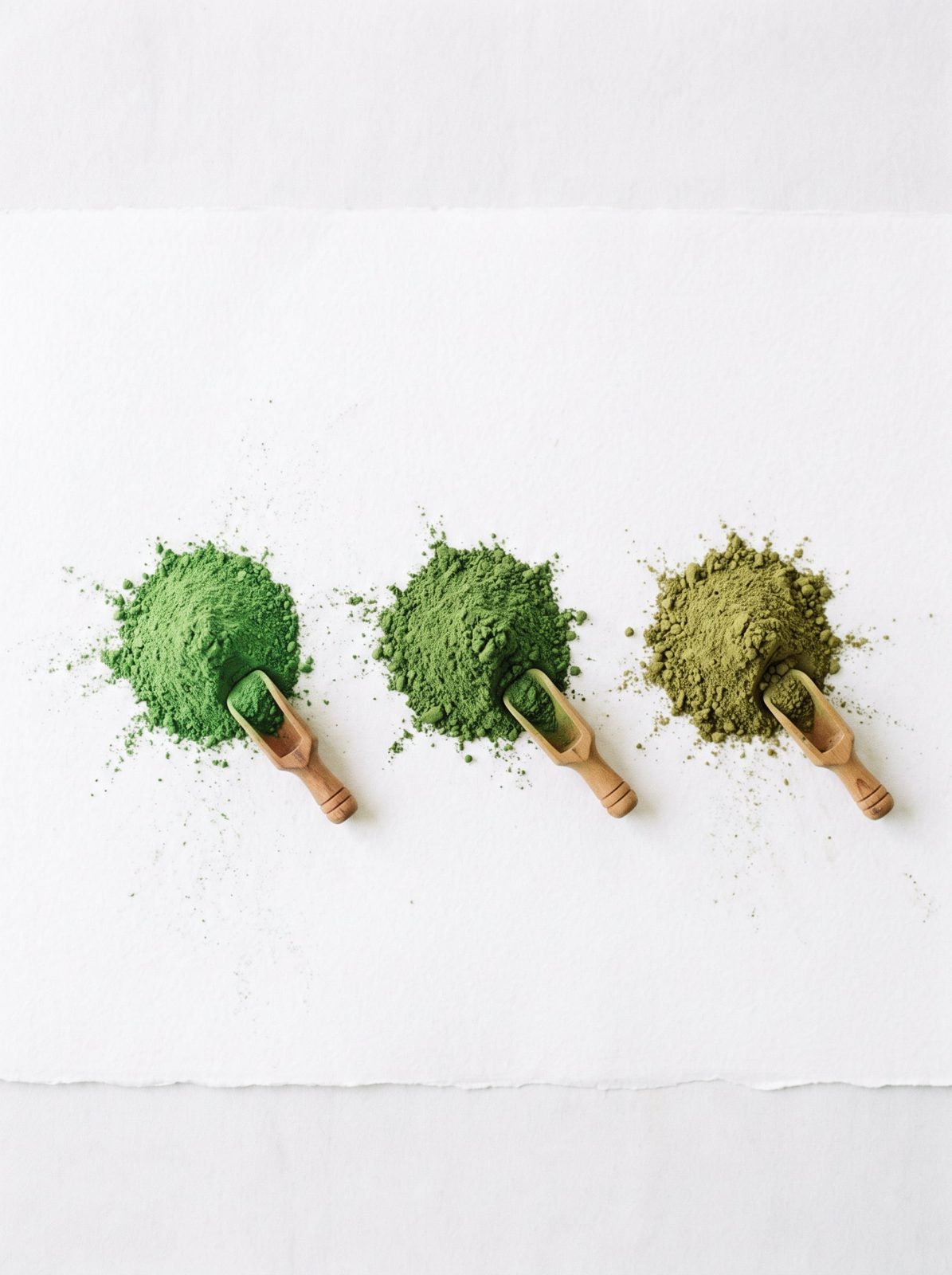
Matcha isn't simply ground-up green tea. Under Japanese labelling standards the tea plants are shaded for two to three weeks before harvest, traditionally under reed screens, straw or cloth. With less sunlight the leaves hold on to more theanine, which gives matcha its savoury depth, and build up more chlorophyll, which gives the deep green.
The picked leaves are steamed for a few seconds, dried, and aged for several months as tencha. Only then are they ground, on stone mills that turn slowly in cool rooms so the powder isn't scorched by the friction. Shaded, steamed, aged, stone-ground: every step is slow, which is a large part of why good matcha costs what it does.
The fast version
Matcha started turning up on café menus outside Japan in the early 2000s, and the matcha latte is now a permanent item at the biggest global chains. Demand has grown so quickly that major Japanese producers limited supply in late 2024, and reports put the 2025 harvest about a fifth below the year before.
Most premium matcha still comes from Japan, from Uji near Kyoto, Nishio in Aichi, and Shizuoka, although China has been promoting large-scale production in Guizhou province since 2018.
A latte in a paper cup is a long way from a tearoom. But it still starts in the same place: a measure of green powder, hot water and a whisk.
What we kept at Pour
Pour, at 3/1 Help Street, is a matcha café. Every drink starts with matcha made fresh to order, before it meets milk, fruit or ice.
Our matcha comes from Grow Green Tea in Lane Cove. Their Keiko goes into our straight lattes, and Mizugaki goes into the fruit drinks and our baking. In tea schools, keiko means practice: matcha good enough to whisk and drink on its own, without the price of the top tiers.
What we left behind is the hour-long ceremony. What we kept is the matcha, the water, and the idea that a few unhurried seconds are worth it, even when the cup is paper and you're heading back to work.
Sources