Matcha
Ceremonial or culinary?
A plain guide to the grades, and which one ends up in your latte.
WRITER: READ. · onehelpst. · 31 OCT 2026
Shop for matcha and two words turn up on almost every tin: ceremonial and culinary. They sound official. They aren't.
"Ceremonial" is a sales word
Japan has no official grading system that defines "ceremonial grade". The term was popularised by brands selling outside Japan, and because no body sets a standard for it, any tin can carry the label whatever is inside. In Japan, only tencha, the dried leaf that matcha is ground from, is regulated on the wholesale market.
How tea people actually sort it
People who practise tea ceremony think about matcha by how it will be made. Koicha, thick tea, needs the smoothest and mellowest matcha, with little or no bitterness. Usucha, thin whisked tea, can be brighter and carry a little bitterness. A third category, keiko, meaning practice, is matcha for lessons: good enough to whisk and drink on its own, without the price of the top tiers.
Every producer draws its own lines between those tiers, and the prices overlap. So the useful question isn't what the label says. It's what went into the tea.
What really makes the difference
The harvest. The first spring picking gives the youngest, most tender leaves and the most prized matcha. Later pickings are stronger and more astringent.
The shade. Shading the plants for two to three weeks before picking keeps more theanine in the leaf, which means more savoury depth and a brighter green. Cutting the shading short is one of the ways cheaper tea saves money.
The grinding. Traditional matcha is ground slowly on stone mills, in cool rooms, so the powder isn't heated by friction.
The plant and the picking. Smoother teas usually come from prized cultivars such as Gokou, Samidori, Asahi and Uji-Hikari, and are often picked by hand. Cheaper teas tend to lean on one common cultivar, Yabukita, and on machine harvesting.
Where it was grown. Many tea specialists argue that matcha not grown and stone-ground in Japan isn't really matcha at all.
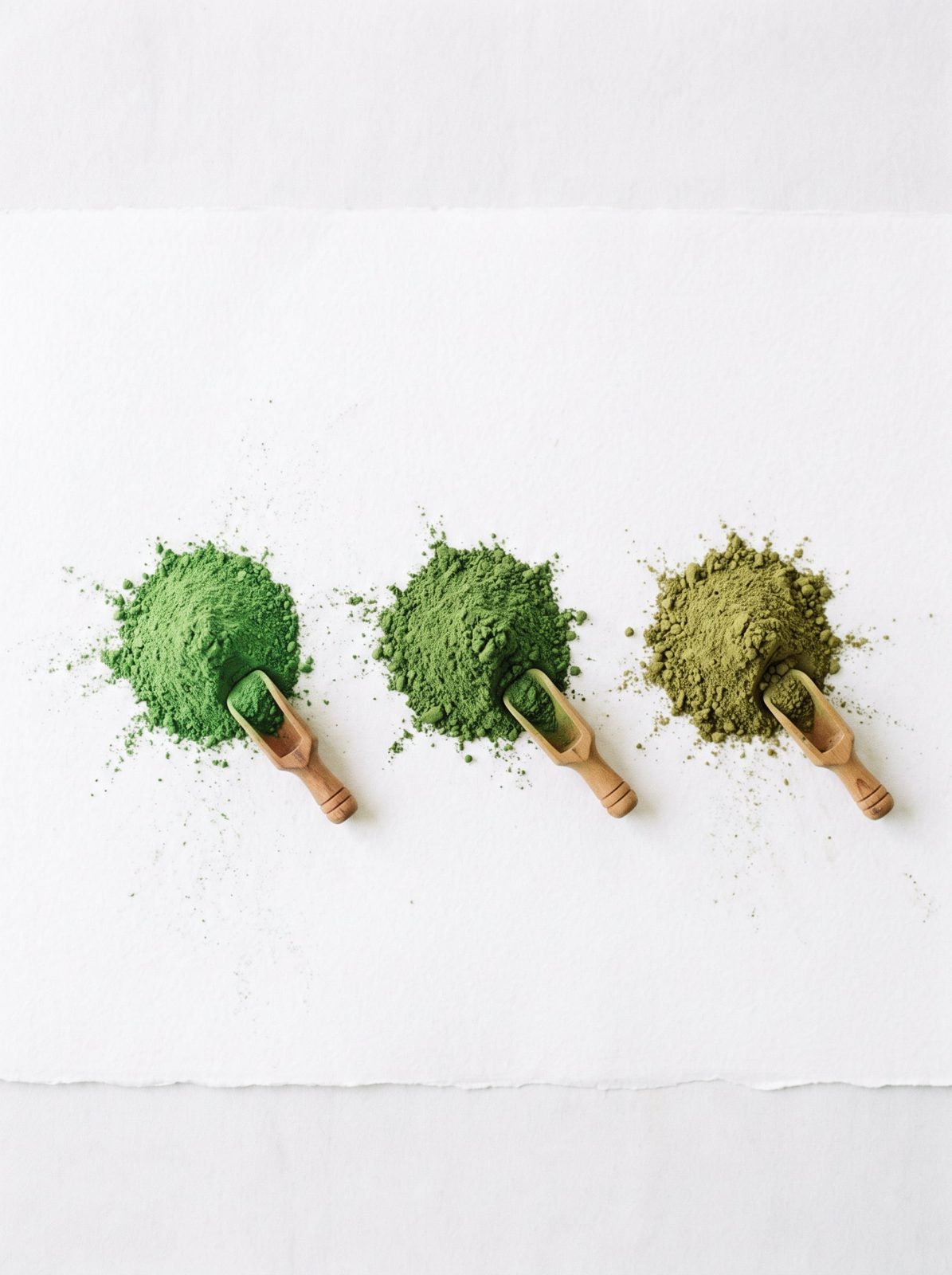
What you can see, smell and taste. Producers look for a vivid green, a fresh smell, a very fine powder, and a balance of savoury, sweet and bitter.
So what is culinary matcha?
Culinary matcha is usually made from older leaves or later harvests. It tastes stronger and more astringent, and that's the point: it holds its own against milk, sugar, fruit and heat. It's made for lattes, smoothies and baking, and is less pleasant whisked on its own with just water.
What goes into your cup at Pour
At Pour we use two matchas from Grow Green Tea in Lane Cove, picked for two jobs. Keiko goes into our straight lattes, where matcha is the main flavour and still has to taste right under milk. Mizugaki goes into the fruit drinks and our baking, where it meets strawberry, mango, yuzu and coconut water.
Neither tin says "ceremonial". We'd rather tell you what each one is for.
Three questions to ask about any matcha
Where was it grown? When was it picked? And what is it for: drinking on its own, or mixing? Any good seller should be able to answer all three.
Sources