Multiculturalism · 5 min read
你好 · 안녕 · G'day.
One street, three greetings: the languages of Help Street.
WRITER: READ. · onehelpst. · 31 OCT 2026
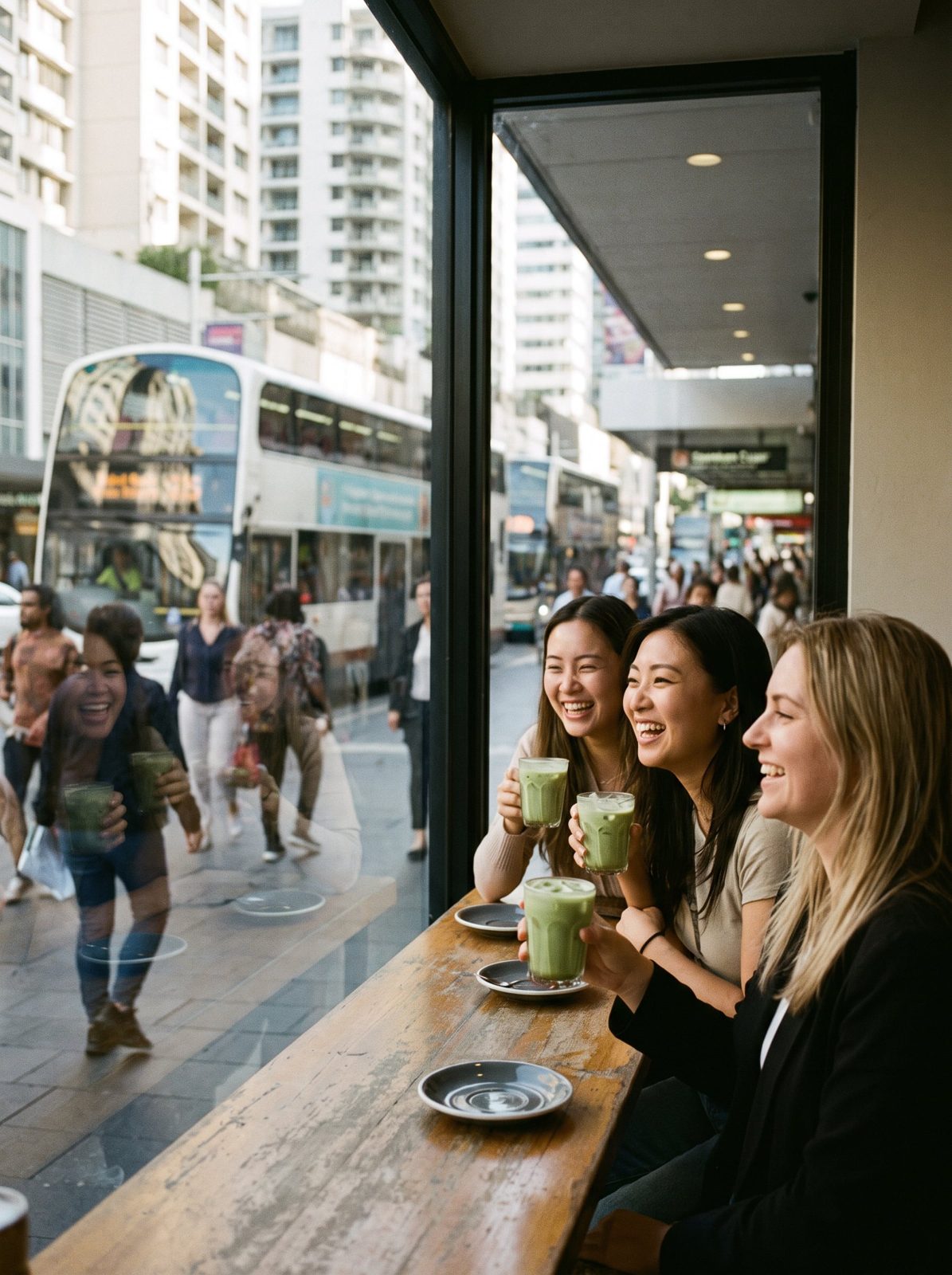
Stand on Help Street for a few minutes on a weekday and listen. English, yes, but just as often Mandarin, Cantonese or Korean. That isn't a guess. It's what Chatswood told the national Census.
Chatswood, by the numbers
At the 2021 Census, 25,553 people lived in the suburb of Chatswood. Only 34.8% of them spoke English alone at home. In 67.1% of households, a language other than English was used.
Where people were born tells a similar story. 34.4% of Chatswood residents were born in Australia, 20.1% in mainland China, 5.5% in Hong Kong and 4.3% in South Korea. Asked about ancestry, 42.4% of residents named Chinese, 13.7% English and 5.4% Korean.
Source: ABS, 2021 Census QuickStats, Chatswood (suburb).
Three greetings is a simplification. Japanese (3.0%) and Hindi (1.9%) are the next most common home languages, and 4.0% of residents were born in India and 2.5% in Japan. The median age is 37: this is a young, working, mixed suburb.
How the street got here
Chatswood was farmland and orchards before the North Shore railway line opened on 1 January 1890, Sydney's first purely suburban line. From the 1950s it grew into a major business and retail centre.
Chinese settlers have been part of Sydney since 1818, but it was later waves of migration, and the high-rise apartments built around Chatswood from the 1990s, that brought new residents from mainland China, Hong Kong and Korea to this part of the North Shore.
Sydney's Korean community is younger. The Korean Society of Sydney was founded in Redfern in 1968, and the first significant wave of Korean migrants, about 500 people, arrived between 1972 and 1975, settling mostly in Sydney. Campsie and Strathfield became the best-known Korean centres; today Chatswood has its own Korean-speaking community too.
Say it like a local
Three languages, two small words each. Try one at the counter.
| Language | Hello | Thank you |
|---|---|---|
| Mandarin | 你好 nǐ hǎo | 谢谢 xièxie |
| Cantonese | 你好 néih hóu | 唔該 · 多謝 m̀h gōi · dō jeh |
| Korean | 안녕하세요 annyeonghaseyo | 감사합니다 gamsahamnida |
In Cantonese, 唔該 (m̀h gōi) is the everyday thank-you for a service, like being handed your drink; 多謝 (dō jeh) is for a gift. Cantonese is usually written in traditional characters.
Why onehelpst. speaks three languages
Because our neighbours do. When we open, every item on the Pour menu is listed in English and Chinese side by side. This website switches between English and 中文 at the top of every page. And Chatswood Voices, our in-store question booth, takes answers in any language.
It's a small thing. But when someone reads their order, or their own words, in the language they think in, they know they're welcome here.
Sources
More from Read
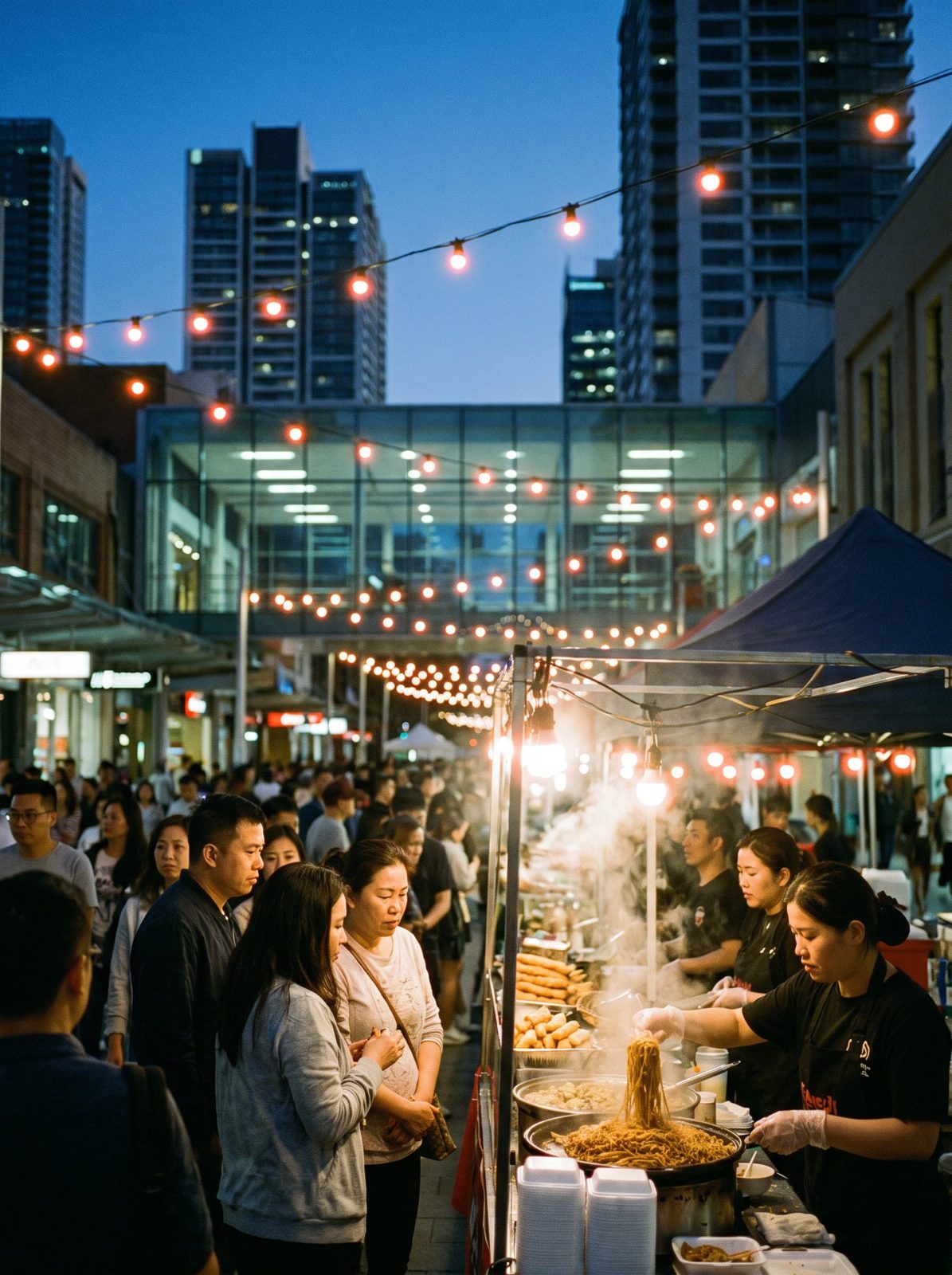 After 5 on Help Street.
Where the neighbourhood goes when the offices empty out.
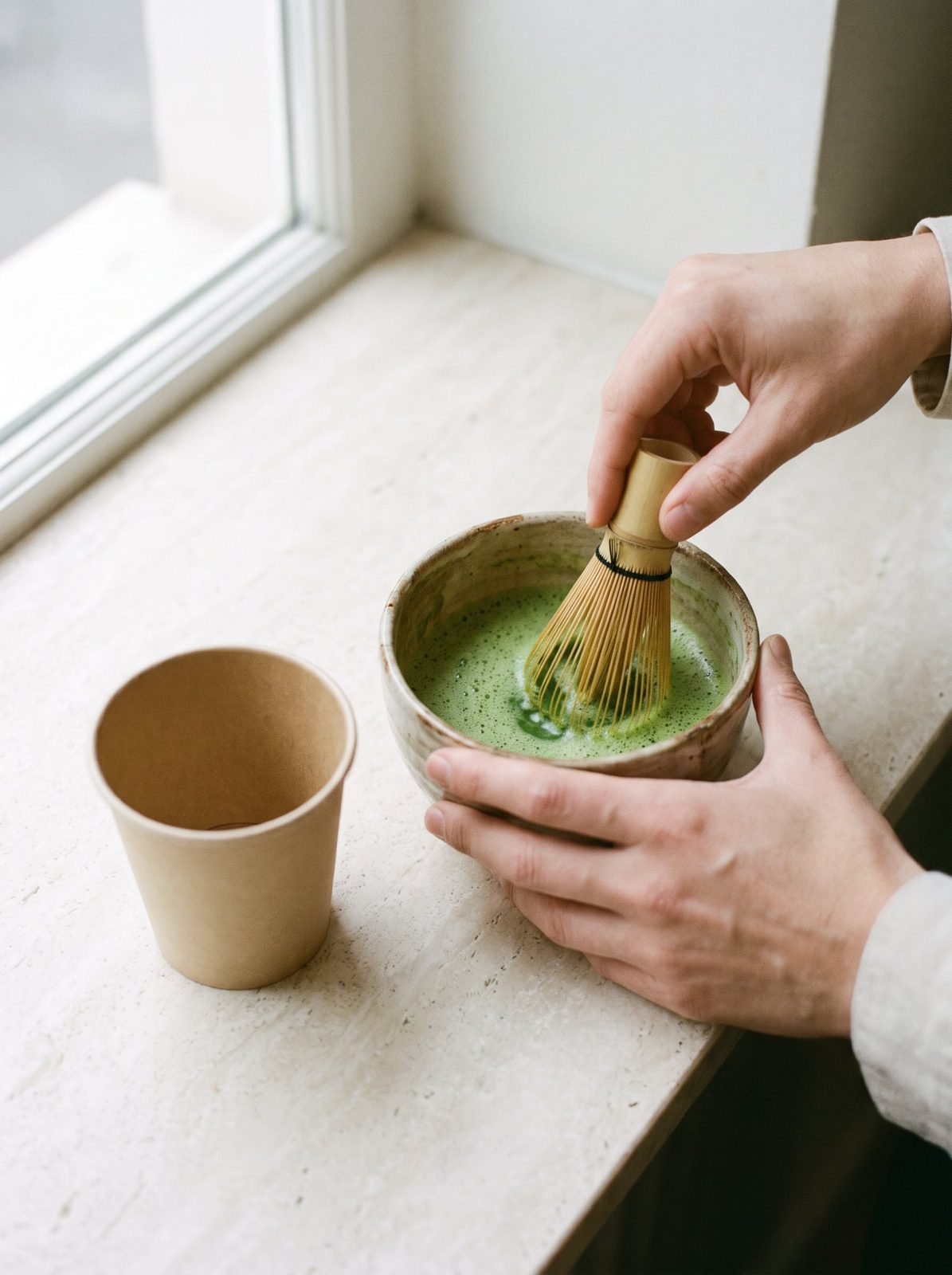 The ceremony in a paper cup.
How a slow, centuries-old ritual became Chatswood's favourite fast drink, and what we kept from the old way at Pour.
 Ceremonial or culinary?
A plain guide to the grades, and which one ends up in your latte.